Showing posts with label Saltaire. Show all posts

Monday, 25 July 2011

A quick trip round Roberts Park


Although recently refurbished, the age of this building (the Half Moon Cafe, in Roberts Park, Saltaire) is clear to see.


And the family crest (above the bird bath), shows Sir Titus Salt to be the inspiration behind the construction; providing a place of recreation for his workers to enjoy.


The bandstand looks splendid in its new paint.


Along the long walkway, three shelters provide seating


...and there are outdoor benches for good weather too.


And, the whole is overlooked by Sir Titus himself.

Sunday, 24 July 2011

Taking the Aire


Approaching the bridge over the River Aire (after which the second part of 'Saltaire' was named), the Robert's Park cricket ground and Half Moon cafe come into view, beyond the sign for the Boathouse Inn (once actually a boathouse, now a pub).


While the view in the other direction looks over to a more energetic pass time; the ramps and half-pipes of the skateboard park

Saturday, 23 July 2011

A 99 with two flakes and toffee sauce please :)


This barge moors here, on the Leeds & Liverpool canal, for the summer; selling ice creams to passers by. It is definitely more quirky than the usual ice cream van :)

Friday, 22 July 2011

Saltaire United Reformed Church


Saltaire URC was built by Sir Titus Salt in 1859. Being a devout Christian, he was keen to cater for the spiritual well being of his workers, as well as their physical and educational needs. I've seen many photos of this famous church and have walked past it a few times, but this was the first time I had had an opportunity to enter.


We had to be very quiet because there was a tour being given a 'talking to' by a couple of Victorians!


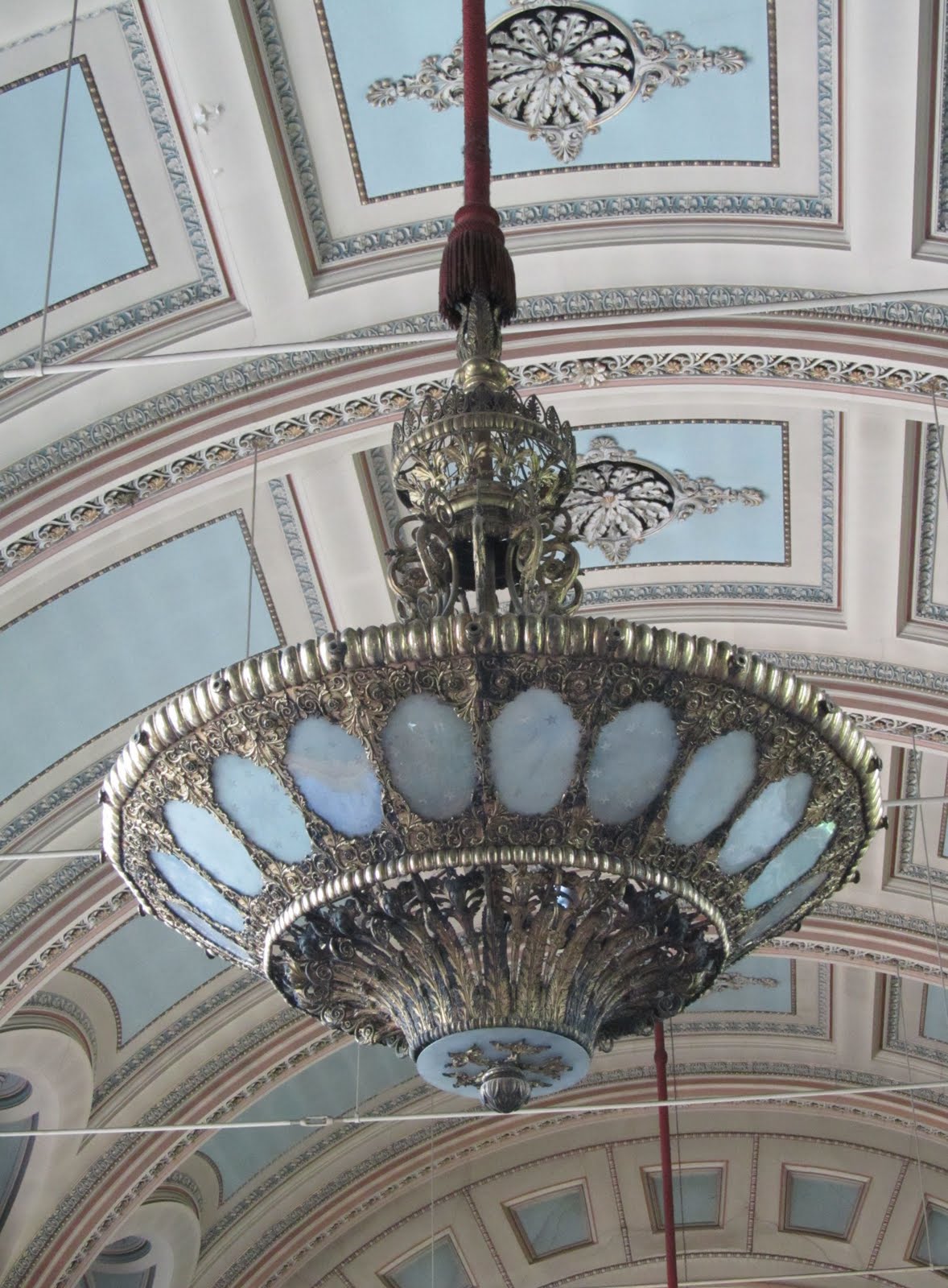
But, it is a beautiful building with lots of detailed and ornate features.


Plus, I loved this collage made by children from a local school!

Tuesday, 19 July 2011

Four lions

Determination


Vigilance


War


Peace


At the four corners of Victoria Square lie four lions. Two guard the corners of the Shipley College building, while the other two guard the corners of Victoria Hall.

Both buildings were constructed by Sir Titus Salt as part of the model village for the workforce of his Saltaire Mill. The Victoria Hall was built in 1869 as a centre of recreation, culture and learning, while the building now occupied by Shipley College was once the school.

Carved from sandstone by Thomas Milnes of London, the lions are named Determination and Vigilance, War and Peace.

Monday, 18 July 2011

Yes, I'm in Saltaire! (or at least, I was last weekend)

More specifically, the photograph yesterday was taken from Victoria Road, Saltaire, looking over the college allotments and the railway line, to Salt's Mill, which was built in 1853 by Victorian industrialist Sir Titus Salt; a new mill on a greenfield site to escape the terrible slum conditions of Bradford and Leeds.


This photo is of the New Mill, built in 1868, between the Leeds Liverpool Canal and the River Aire.

I'll be posting a small selection of photos of Saltaire over the next few days, but for a much more comprehensive view of the town, browse the archives of this photo blog by JennyFreckles (who actually lives here!).

Sunday, 17 July 2011

Where am I?


Last weekend, I took a trip up north to visit Sacristan.


On Sunday, we were out with the Walking Group, but Saturday was spent doing a bit of domestic stuff, a bit of New Wine preparation and taking a stroll round his neighbourhood (which may look curiously familiar to a few readers!)

Anyone recognise where I am?

Thursday, 2 September 2010

Looking over Saltaire


This is Salts Mill. During the years when Bradford was in the forefront of worsted cloth production, Sir Titus Salt chose to move out of town to a green field site to build his new mill. The reason for this was that he was disgusted with the appalling living and working conditions in the city.

The site he chose was beside the River Aire, the Leeds Liverpool Canal and the railway, within easy reach of Bradford, but far enough away to build in the way he wanted. In total, he relocated his entire business of five separate mills out of Bradford to this new location, which he named Saltaire (a combination of his family name and that of the river).

Saltaire is now a World Heritage Site; tribute to a philanthropist who cared enough about his workers to provide them with decent housing, a hospital, a wash house with running water, the Victoria Hall for meetings and social gatherings, a library, allotments and a school.

The village is built on a grid pattern and the bulk of it is very noticeable to the right of the photograph. The two main roads through the village are Victoria Road and Albert Road (quite obviously named after regents) whilst the other streets are named after members of Sir Titus' family.

For much more information about Saltaire, try out the village website, http://www.saltairevillage.info/ , created and maintained on a voluntary basis by members of the local community.

And for a personal insight into life in the village, visit JennyFreckles newly revamped photo blog, http://saltairedailyphoto.blogspot.com/ .

Tuesday, 9 February 2010

Ground floor gallery

According to the Visitors Guide,

The 1853 Gallery is so named because that was the year the Victorian Mill was originally opened for manufacturing fabrics.

The Victorian Mill in question is that built by Sir Titus Salt close to the market town of Shipley in the West Riding of Yorkshire and alongside the waters of the River Aire. Now renovated, the ground floor is given over to the 1853 Gallery, which houses a permanent exhibition of works by the Bradford born artist David Hockney. http://www.davidhockney.com/

My first impression of the gallery was the airy feel of the large, high roofed room with its regimented rows of tall arched windows and beautiful stone tiled floor. The second was of colour. Many of Hockney's paintings are awash with colour and the vibrancy of the artwork gives a surprisingly modern feel to the historic building.

I'd be hard pushed to say what caught my eye the most, but I was drawn to this display of pottery; just one part of the much larger Burmantoft Pottery Exhibition.


There was something strangely satisfying about the combination of the pattern, colour, shape and size of the pieces, arranged in juxtaposition, which just made me want to look.